Showing posts with label self help. Show all posts

Tuesday, June 4, 2019

The Leader Who Had No Title by Robin Sharma


Title: The leader who had no title
Author: Robin Sharma
Publication: Jaico Books
Price: INR 195

This happens to be a pretty long one as this review was my semester project  for college.

‘The Leader who had no Title’, a beautiful book by Robin Sharma, the author famous for his book ‘The Monk who sold his Ferrari’, begins in a very similar fashion as the latter. 


This book tells the story of transformation of ordinary people into leaders.

The protagonist, Blake Davis, a war veteran and an employee at a book company has had a hard life. He lost his parents early, had an unsuccessful love life and looked back at his military days as a bad phase of his life and career. He described his pre transformation phase of life as: “I medicated myself to too much TV, too much food, and too much worry – all designed to avoid having to feel the pain that one feels at the recognition of one’s lost potential”. His biggest challenge in life was to re-orient himself to the world that had forgotten him, but this to him seemed an impossible task.

Amid all things mundane and inconsequential, one day, an old man with the name of Tommy Finn, came to meet Blake, describing himself as a friend of his father. A very quaint old fellow, Tommy tells him that he likes to have no flashy title, no big designation showing up on his business card, but is perhaps the most respected and prized employee of the organization, thanks to a certain LWT theory that he knows and now wants to share with Blake so that he is also successful in his life. Tommy goes on to tell Blake that any person need not have any formal authority or designation to lead others, in fact to lead you really need no title whatsoever. Blake, unhappy with his life that he is decides to follow Tommy and learn what he has to teach.

Tommy asks Blake to meet him at a cemetery next morning. At the cemetery, Blake realizes that Tommy drives his dream car and thus is a rich fellow. He further finds that the old man has dug up two graves, each contain a tablet, the first having “The 10 Human Regrets” inscribed on it and the other, a golden one, with “The 10 Human Victories”. The inscription on the first one, teaches Blake (as well as us), the ten most prominent regrets people die with. Ranging from not been able to detect their inner beauty, or not being able to help others just because they thought they were incapable to having wasted a life which was worth gold and so on. The second one reassures the faith in oneself and motivates both the protagonist as well as the reader about the ten things if done, can lead to one’s life being called super successful. These tips range from having spent your full potential, to the rich glory of the achievements of those whose lives you bettered, to see the success of the new roads that you built, to be a leader without a title and so forth.

All this really inspires Blake to continue his quest about the LWT theory. Tommy then takes him to meet the four great leaders that had inspired him to walk along this path of LWT.

First of all, he takes him to a one of the best hotels of New York, a favourite haunt of the fashionable people. Here, he introduces him to a housekeeper, Anna who is of Argentina origin. Anna tells him how she knows hers is apparently an insignificant job, but at the same time it the most crucial job in the functioning of the hotel. How, even though she is just a tiny housekeeper, she has carved a niche for herself in this field and how the great CEOs who come to stay in the hotel specially request her to be their housekeeper. Anna, for the first time in Blake’s life praises and recognizes his great good to the nation by being in the army. She gives him the crux of the LWT theory. LWT stands for ‘Lead Without a Title’. Her underline philosophy is that ‘You need no title to be a leader.’ She gives him the entire learning of her life in a five letter acronym: IMAGE. Here
  •   I – Innovation. She believes that each and every day we spend on this earth has to be better than our previous day. There has to be innovation and repetition of any kind will lead to stagnation.
  •  M – Mastery. Anna believed that nothing in this world deserves anything less than our very best and maximum potential.
  •  A – Authenticity. In Robin Sharma’s words, ‘It has never been so important to be so trustworthy. It has never been so essential to be authentic.’
  •  G – Guts. Anna tells Blake that people often do not have the courage to move the path towards getting greater vision. Thus one must have guts to attain much in life.
  •  E – Ethics. As Tommy mentioned, one can never go wrong in doing something right. And as Anna elaborated, nothing is more precious than staying consistent with the values.


Next, Tommy took Blake to meet the second LWT teacher, Ty Boyd, a five-time world shalom skiing champion, who had had an unfortunate accident which had shattered his sports career. His main ideal was simple, ‘Turbulent times build great leaders’. He also gave him a five letter acronym that contained the nectar of all that he had learnt from his life: SPARK.
  •     S – Speak with candor. He believed that it was actually communication that was the cradle of any kind of mistrust or misunderstanding and that the deliverance of nothing but the naked truth was the solution to get rid of such mishaps.
  • P – Prioritize. As Ty put forth the point, ‘Focus on the best and neglect all the rest.’ He even believed that focusing obsessively on the things that matter most to you is not unhealthy.
  • A – Adversity breeds opportunity. He explains that for every dream that has to be vandalized keeping in mind the changes in the scenario or any other reason, an another pristine, pure idea can take birth.
  • R – Respond versus react. Ty told Blake that to keep grace under pressure and to respond in place of react was the great key to survive with the LWT theory.
  • K – Kudos to everyone. Everyone for everything well done needs appreciation.


Then they went to meet the third teacher, a playful little Jackson Chan, an ex-CEO of a multibillion dollar technology company turned gardener. He believed that ‘The deeper your relationships, the stronger your leadership’. The acronym that he gave was HUMAN.
  • H - Helpfulness. He believed that to be eternally happy, one must do more than he/she is paid to do.
  • U – Understanding. Speak less. Listen more. To understand other person’s perspective was a soft skill you must have.
  • M – Mingle. He believed that another important aspect of the LWT theory was that one must be the connecting link between people.
  • A – Amuse. Fun makes you want to collaborate more, it makes work easy.
  • N – Nurture. One must take care of the company, take care of the colleagues. Get more customers, get great business. Basically in pursuing the LWT theory, one must not forget the basic duties he/she has to undertake.


The forth and the last teacher was Jet Brisley, one of the best known massage therapists in all of New York. One of the best lines he spoke was ‘Blood, sweat and tears are necessary to reach dreams, hopes and joys.’ To be great leader, one must first be a great person. One must be a leader of self. According to Jet, the seven fundamentals of personal leadership are: learning, affirmations, visualization, journaling, goal setting, exercise and nutrition. The acronym he gave was: SHINE.
  • S – See clearly. One must perceive the conditions and circumstances clearly. One must have a clear view of the rules and ethics one follows.
  • H – Health is wealth. Health is something we take for granted until we lose it. Good health is the foundation on which the pillar of our life stands.
  • I – Inspiration matters. He explained that one must indulge in activities that rekindle our passion and open closed doors which hinder our performance.
  • N – Neglect not your family. He believed that loved ones matter. Family was the ultimate thing we worked for.
  • E – Elevate your lifestyle. Enjoy life. Never make a compromise with your own life for it is important. It is all about you.


The book finally closes with Tommy leaving for his heavenly abode, the very next day of their meeting the 4 teachers. He leaves behind a note for Blake and gives him his car as well. His last words in the letter read, ‘Dream boldly. Live beautifully. And to your last breath Lead Without a Title.’

 The book ‘The Leader Who Had No Title’ brings into the view that is not very commonly considered: one need not be a leader to lead. A very pleasant idea that I found towards the beginning of the book was where the author mentions that worrying for things beyond one’s control is a pretty good formula for illness. In general, we live in an environment where we find worrying intrinsic to our nature and that to lead, one needs to have a high flying designation or rank or else one may cease to be effective. But this book provides a very entertaining and interesting perspective to the same by proclaiming loud and clear that leadership needs to come from within.

The book gives numerous, in fact countless brilliant suggestions, even if we apply some on our lives, we shall surely be changed individuals altogether. The book gives a practical approach about creating a leader within ourselves, rather than being a stereotypical checklist on what effective leaders must do and what they must not. As Blake remarks, embracing uncertainty is a precious gift, if we challenge the odds and decide to lead without a title, I do not feel the positions expressed in the book are fictional. All of it can be lived, provided we become the fountainheads of genuineness and embrace this LWT theory that has been explained here wholeheartedly.

In a description about the four teachers, Tommy explains that ‘they have the discipline to do what they know to be important – and right – versus what’s easy and fun.’ Easy paths may be tempting, but very often they are superficial and do not lead to desired destinations, but most surely the thorny paths need an awful lot of internal motivation. Leadership is not something to be learnt or practiced at workplace, it needs to reflect in our persona, in every task we undertake, in every relationship we build, this leadership should be seen.  As Gandhi mentioned, “In a gentle way, you can shake the world.”

‘The 10 human regrets’ and ‘the 10 human victories’ described at the onset of the story go a long way in making us realize that we are literally living this life in darkness and that the things that actually matter are the ones we are unaware of.

A great piece of advice by Tommy that shakes the very foundation of our work style is that success is created through the performance of few daily disciplines that stack up together and produce a result that is much more than planned and expected. This is actually true, just as it is said drop-drop make the bucket fill, our daily routine of good turns and jobs well performed will ultimately lead to our successful professional career and thus a fruitful life.

The first teacher is Anna, a housekeeper. The author has used people from all walks of life to suggest that one need not belong to a particular class or creed to be successful, to use LWT or to be a teacher of something such as this. Even a seemingly ‘petty’ housekeeper can channelize her energies and become worthy of giving such intelligent piece of advice. The second teacher is a retired skiing champion. He had a lot of victories to his name. He had the world to himself yesterday, but today he was an ordinary man. Thus he spoke, ‘turbulent times make great leaders’.  The third was an ex-CEO who had now taken to gardening, a seemingly funny plan of action. The fourth was a massage therapist. The profiles of the four teachers remind me of a little couplet:

“If  I  were  a  cobbler,  the  best  of  all  cobblers  to  be.
If I were a tinker, no tinker beside should mend an old kettle like me”

Anna had a pretty tough childhood, but she seemed to have forgotten the pains of the past that might dampen her today. She seemed to exude so much positivity which was actually contagious. The acronym IMAGE for innovation, mastery, authenticity, guts and ethics seems so genuine. Innovation is indeed the need of the hour. When everything seems to have been ‘copy and pasted’, originality takes the crown.  Mastery over self, over the work, over the processes indeed gives us an upper hand in the task we pursue.  Authenticity is a kind of ripened stage of honesty. If one is right, one must have the guts, the confidence to speak it up. Courage is the ornament of leaders. The ethics are the final bunch of keys required to open the door to success.

In the acronym SPARK by Ty Boyd, the letters stand for speak with candor, prioritize, adversity breeds opportunity, respond versus react, kudos to everyone respectively.  To speak clearly to avoid any kind of misunderstanding is very important but this can happen only if you are fully aware of the actual situation and have the guts (the G in IMAGE) to prove your point and can prioritize what is good and what is not. Leadership is all about this. To respond to a situation calmly rather than reacting or overreacting is surely an important tip in self improvement. A leader needs to have the time and temperament to appreciate the beauty of the work done by others.

HUMAN by Jackson stood for helpfulness, understanding, mingle, amuse, nurture respectively. Who does not know helpfulness is a virtue. Or that mingling with others or an understanding nature is not the order of the day. This set of 5 virtues is a kind of reiteration of our duties toward those, we shall be a mentor, a leader to.

Jet gave his acronym as SHINE for see clearly, health is wealth, inspiration matters, neglect not your family and elevate your lifestyle.  His philosophy is that in a pursuit of being a leader and affecting other people’s lives, we mustn’t forget our duties towards ourselves and towards our loved ones. For above everything, if we are, our world is, else there is nothing.

Having said all that I feel, the book does not address clearly, a problem faced by many of us: we know we are genuine and we are the leaders, we do only good, but what if the others don’t. As such we do not hold any formal authority and thus we cannot expect the others to behave the same as we do. What to do in a situation such as this?

The book closes at a very encouraging note, having shown the transformation of ordinary people into great leaders without a title. I personally feel this book is a must read for all as if we follow the simple guidelines given therein, we can definitely change a lot about our lives and as the book claims, better the lives of as many as 30 thousand people in a short span of time.

Friday, September 6, 2013

THE MANTARAM HANDBOOK A PRACTICAL GUIDE TO CHOOSING YOUR MANTRAM AND CALMING YOUR MIND BY EKNATH EASWARAN


TITLE : THE MANTRAM HANDBOOK

AUTHOR : EKNATH EASWARAN

PUBLISHER : JAICO PUBLISHING HOUSE

“All that we are is the result of what we have thought:
We are formed and molded by our thoughts. Those
Whose minds are shaped by selfless thoughts give joy
Whenever they speak or act. Joy follows them like a
 shadow that never leaves them.”

This is one of the famous twin verses of The Compassionate Buddha, says the Mantram Handbook.
Eknath Easwaran was professor of English literature at the University of Nagpur, India. He is the founder of the Blue Mountain Center of Meditation.The Mantram Handbook has a foreword The Brain, the Mind and the Mantram by Daniel H. Lowenstein, MD.
The Mantram Handbook is one of the most precise and simple self help book that I have read till date. I was skeptical about the book simply going by the name and the synopsis as I have a mantram of my own. It rather turned out to be a valuable and an interesting  read.
 This beautifully written book is very clear in its instructions as to how to initiate and choose your mantram. How the power of mantram can help turn fear into fearlessness, anger into compassion and hatred into love, basically keeping the mind steady ! How it can help in excitement and depression. It also gives simple and easy guidelines as to how we can become established in the mantram and how we can reap benefits of the mantram in our life.
 I could very easily correlate with the book. I am sure a lot of readers would be able to connect with it as easily.
The two things that I liked the most about the book are, that all the religions have been treated at par. Eknath Easwaran has basically said that you may belong to any religion but you can still have a mantram of your own. The power of the mantram will see you through thick and thin and will illumine your life for sure.

Second thing that I liked the most about this book is that there is no spreading of superstition of any kind. He rather demystifies the whole thing. Easwaran says “the mantram transforms negative forces in consciousness into constructive power.” Very well said I would say.

The book comes highly recommended especially to the spiritually inclined and also to novices like me. Go ahead read the book and enrich your life.
The Bible says,”As a man thinketh in his heart, so is he.”

Tuesday, May 14, 2013

The Alchemist by Paulo Coelho


Title : The Alchemist
Author : Paulo Coelho
Publisher : Harper Collins
ISBN : 9780061233845

There is time for everything. Nothing happens by chance because there is the force of universe that makes things happen the way they happen and when they have to happen. I must confess that though I have heard so many good things about the book 'The Alchemist' as well as the author, - Paulo Coelho, it took me a long time to pick this book up and read it. It has been on my reading wish list for the longest period of time. But it is indeed true, there is time for everything and nothing can pre-pone or postpone the natural occurrence of that happening.

Now after having read this book, I can say sometimes delay is for good. Perhaps it was waiting for that space and attention in my mind which it deserved and I am happy that it could get its worth. Even after having read it a couple of weeks back, I have taken so many days to write about the book. I wanted the written matter of the book to sink it, get digested and get soaked in my self. This sinking, digesting and soaking is perhaps one of those things which Paulo Coelho categorizes as "It's the simple things in life that are the most extraordinary" and the extraordinary-ness of the same is understood only by experiencing it.

The Alchemist is a story of a young shepherd boy who ventures to follow his dreams of treasure in a distant place. On the journey, many experiences, incidents and people await him to transform him into a wise and enlightened individual. Paulo Coelho beautifully accentuates the significance of the journey over that of the destination. The treasure could be anything - riches, love or divine wisdom but the same becomes secondary compared to what all is gathered and what all is assimilated on the way to reach the destination. And once that is done, it becomes immaterial whether destination is actually reached or not as the pleasurable journey itself becomes the goal.

The Alchemist is one of those unique books which are packed with insightful acumen without overwhelming the readers.  The ability to listen to one's personal legend, understanding the closeness to the Soul of the World, utilising the positive force to achieve the personal legend is what this life is all about. And universe ensures that to an individual who is determined enough, the Personal Legend does get revealed.
"When you want something, all the universe conspires in helping you to achieve it."
"Everyone when they are young, knows what their Personal Legend is. At that point in their lives, everything is clear and everything is possible. They are not afraid to dream, and to yearn for everything they would like to see happen to them in their lives. But, as time passes, a mysterious force begins to convince them that it will be impossible for them to realize their Personal Legend. "

The enthusiasm to take every moment as it comes, the dexterity to give the best to that moment and then the gratification of  having given done one's best, is all that is required for a successful living. Its when we try to steer our life's sail against the tide because of innumerable fears and apprehensions, that the problem begins."We are afraid of losing what we have, whether it's our life or our possessions and property. But this fear evaporates when we understand that our life stories and the history of the world were written by the same hand."

The author talks about significance of various other aspects in our lives like - voice of heart, dreams as God's messages, role of an individual in the cycle of life and positive force working its magic strangely. The written text would inspire you - to follow your intuition no matter how illogical it may sound to others, to unlearn a few things in order to make room for new, to explore beyond obvious, to see past prejudices and perceptions and much more. 

Undoubtedly, a 'must read' book.

Monday, February 25, 2013

LET'S TALK MONEY - ROADS TO RICHES MADE EASY BY AKHIL KHANNA

TITLE : LET'S TALK MONEY - ROAD TO RICHES MADE EASY
AUTHOR : AKHIL KHANNA
PUBLISHER : TIMES GROUP BOOKS


I’d call this book a self help book for understanding the finer nuances of finance. This book by Akhil Khanna, comes with a tag line of “Road To Riches Made Easy”. I don’t know about the road to riches but the author has definitely made the world of finance along with its jargon very simple and easily understandable.
Akhil Khanna, is an MBA from University of Sheffield (UK) and he specializes in Financial Management. His motto with respect to this book seems to be: “It is not important what one earns; true wealth is what one manages to keep.” Very aptly said and I heartily agree with him.
Akhil Khanna has nearly covered everything in his book to give you a basic understanding about how the financial world works and how we should go about it as an individual or an entrepreneur.
The author has discussed money, property – evaluating the nature and the earning potential of the property, multiplying fixed income, debt and earnings, changes in the world economy and its effect on investments and other factors effecting investments. He has even discussed the professionals managing other people’s money, how insurance companies work and how having the right insurance is beneficial and can make your life stress free. He has discussed the world financial crisis of 2008 and the effect of this on financial institutions/households/corporate s and governments.

Akhil Khanna in midst of discussing the various fields of the financial world has dedicated one whole chapter to investing in happiness. This definitely came as an unexpected pleasant surprise.

I would recommend all readers to go through the book really slowly so as to grasp the fundamentals.
This book is highly recommended to all laymen like me. 

I’d sum up by using Akhil Khanna’s words

”Where you reach on the last day of your life is not as important as the consistent happiness with which you enjoyed the journey.”


Wednesday, December 5, 2012

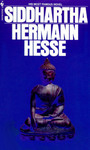
Siddhartha by Hermann Hesse

Title : Siddhartha
Author : Herman Hesse
Publisher : Bantam Book

 "The true profession of man is to find his way to himself"
Siddhartha is the story of every thinking individual as one maneuvers through the paths of life while trying to work on the conflicts that the three essential elements of a being pose - mind, body and soul.  I consider such books small little pauses in the otherwise madly running lives in current times. They goad an individual to stop, think, introspect and examine which one of the three - mind, body or soul is dominating the self at any given point of time.

Siddhartha, as a boy got enchanted by the thoughts of gods and sacrifices, as a young adult left his home in order to conquer his mind and body to live as an ascetic, as a man got immersed in fulfilling the pleasures of senses and becoming their slave, and later left everything that was dear to him to embark on a fresh journey to find peace and Atman. His life came a full circle starting from a boy to a man and then back to being a child again. The boy who was boastful of three incredible arts - fasting, waiting and thinking, saw the same abandoning him one by one. He ended up exchanging the skills that he had acquired during the diligent years of youth, for the transitory things which usually obsess an ordinary man. Eventually he had to get in touch with his inner self in order to attain the divine peace.

As  he progressed in his journey of life, his personality changed, his needs changed and accordingly his teachers changed and in the end he learns the essence of life from outwardly mute river. Sitting silently by the river, watching its continuous flow, Siddhartha learns the timeliness of a being, unity of things and the art of listening to that one sound - the Om sound - which has the power of submerging every diverse sound in its folds.  "Learned from river to listen, to listen with still heart, with a waiting, open soul, without passion, without desire, without judgment, without opinions. "

A very thought provoking story but then it does make you believe that things happen when they have to happen and when the time is ripe for the same to happen. Perhaps this was the reason that even after meeting Buddha and getting impressed with his demeanor and his teachings, Siddhartha felt the need to leave that place as he believed that a teacher can simply impart knowledge but cannot make the disciples share the wisdom that experience only brings. "Wisdom is not communicable. Knowledge can be communicated, but not wisdom. One can find it, live it, be fortified by it, do wonders through it, but one cannot communicate and teach it."

Siddhartha's words while he decided to leave Buddha to embark on his pursuit alone - "Buddha you have reached the highest goal which so many thousands of Brahmins and Brahmins' sons are striving to reach. You have done so by your own seeking, in your own way, through thought, through meditation, through knowledge, through enlightenment. You have learned nothing through teachings. Nobody finds salvation through teachings. To nobody, can you communicate in words and teachings what happened to you in the hour of your enlightenment. The teachings of the enlightened Buddha embrace much, they teach much - how to live righteously, how to avoid evil. But there is one things that this clear, worthy instruction does not contain, it does not contain the secret of what the Illustrious One himself experienced. "

Tuesday, May 15, 2012

Creating Time by Marney K. Makridakins


Title : Creating Time - Using Creativity to Reinvent the Clock and Reclaim your Life
Author : Marney K. Makridakins
Publisher : New World Library
ISBN : 978-1-60868-111-2

We all want more time than what we have. Twenty four hours in a day do not seem to be enough to do, to achieve, to try and in a nutshell, to lead a fulfilling life and we all find these overtly abused excuses of lack of time stumbling out of our mouths so very often - "I do not have enough time" or "If only I had more time" or " I am too busy".   The author Marney K. Makridakins, very validly points out that despite the technological advancements which have enabled us to achieve much more in a month than we ever did in a year, earlier, our lives have become busier manifolds. So are these advancements helping us in leading a relaxed life? In fact, just the contrary is true.

In 'Creating Time', Makridakins is trying to take the major hurdle of lack of this essential commodity - time, head on. After understanding, evaluating and analyzing the concept of time management, she has devised some very exciting and interesting tools to create more time. Interestingly what all it requires is some creativity which human mind is very much capable of.

Makridakins encourages the readers to embark on a journey of rediscovering a unique relationship with time. In fact, this is an empowering exercise which could gradually lead people to move away from 'making time and managing time' in their lives to 'imagining time and creating time'. For this, it is essential to have an open mind and to be prepared to experience the great metamorphosis. Here is a very brief peek into what she suggests us to change - Change the way you talk about time, Change the way you measure time and Change the way you experience time. It is a worthwhile exercise to read the complete book to get the full benefit.

The various tools that she presents in the book, make use of technology, art, philosophy, science, imagination, logic and of course, the most important ingredient - the human creativity in finding ways to create more time. Each chapter is full of interesting anecdotes, personal stories, references and ARTsignments. The ARTsignments are hands-on art projects designed to initiate self awareness and transformation in a playful manner. Common time related challenges are enlisted along with various ways to face them.

For me, the highlights of the book were - the poetic pauses at the beginning of each chapter and the  art work by over 80 contributors which help in illustrating the point that Marney is trying to make through her writing - the multi-faceted nature of time.
The title itself is very intriguing which will entice the readers to pick this book up and see what all it has to offer in terms of creating and expanding more time in the same 24 hours.

It is a wonderful book on time management bringing in unique perspectives which have not been offered or thought about before. So I would say, it is a great accompaniment to the time management courses besides being a great inspirational book. 

Wednesday, May 2, 2012

Old Path White Clouds by Thich Nhat Hanh


Title : Old Path White Clouds
Author : Thich Nhat Hanh
Publisher : Hind Pocket Books
ISBN : 81-216-0675-6

Thick Nhat Hanh is a Vietnamese Buddist monk and an accomplished author who has penned - Being Peace, Under the Banyan Tree, The Path of Emancipation and 85 other books. In 'Old Path White Clouds' , he presents the life and teachings of Gautam Buddha spanning over 80 years.

The story is divided into small chapters and are presented in a very simple language.  Through this book, readers get a glimpse of Buddha's thoughts, how he followed his inner calling to embark on a journey of self realization and what all he experimented with to attain the blissful state. During the course of his search, he first tried the path of self deprivation but later realized that -"The body is not just an instrument, it is the temple of the spirit, the raft by which we cross the other shore." He stopped practicing and advocating self-mortification.
"He realized that body and mind formed one reality which could not be separated. The peace and comfort of the body were directly related to the peace and comfort of the mind. To abuse the body was to abuse the mind. "
After attaining enlightenment, he dedicated his life to leading many individuals to the same path of peace and devotion.

He taught the world the significance of mindful awareness and living in the moment by being a role model who practiced every ounce of what he preached. "Your mind should  not be chasing after thoughts of yesterday or tomorrow, but should dwell fully in the present moment. Living in mindful awareness is living in the moment, your mind and body dwelling in the very here and now. Living each day mindfully is the very basis of spiritual practice."

It is interesting to read how Buddha compiled the Noble Eightfold enlightenment path, and how throughout his life, he tried to share his peaceful state with so many others who came in contact with him. One very important aspect, though very small, caught my attention - he was very effective in teaching every individual in the language that the person understood the best, for instance, Svasti was a buffalo boy and he was taught using the terms that he was most conversant with while to a Sitar player he used the strings of the sitar as an example while showing him the divine path. There is a lot that a reader can take from the book. This is the first biography of Buddha that I read which took me through some very significant moments of Buddha's life.

However, I cannot skip mentioning that this book does falter at many points - it is repetitive and many parts are redundant which only increase the volume of the book without enriching the readers in any way. The book could have been more precise to be more effective. Some of the chapters give an impression as if they are compiled bits and pieces from here and there. As I understand, a biography should be more tight with no scope of redundancy because it is primarily a sincere presentation of facts. Also, the narrative keeps vacillating from Svasti the buffalo boy to Buddha himself, which makes it a little disruptive sometimes.

Thich was nominated for the Nobel Peace Prize in 1967 by none other than Martin Luther King Jr. He is the founder of Van Hanh Buddist University in Saigon, and has taught at Columbia University and the Sorbonne.

Must quote a few lines from the book -
"Bhikkhus, when you have seen deeply and have attained the Way, the beautiful may still appear beautiful and the ugly may still appear ugly, but because you have attained liberation, you are not bound by either. When a liberated person looks at beauty, he can see that it is composed of many non-beautiful elements. Such a person understands the impermanent and empty nature of all things, including beauty and ugliness. Thus he is neither mesmerized by beauty nor repulsed by ugliness."

Bhikkhu must cleanse his body and mind of desires, attachments, anger and aversions.

Love is possible only when there is understanding. And only with love can there be acceptance."

Wednesday, February 15, 2012

Living Fully by Shyalpa Tenzin Rinpoche

Title : Living Fully - Finding Joy in Every Breath

Author : Shyalpa Tenzin Ripoche

Publisher : New World Library

ISBN : 978-1-60868-075-7


Shyalpa Tenzin Rinpoche was born in Himalayas and was trained as a Lama from the age of four. Rinpoche received transmissions from all the major schools of Tibetan Buddhism and he is a lineage holder of the Great Perfection (Dzogchen) tradition. Dzogchen is an ancient spiritual teaching developed in Tibet within Tibetan Buddhist tradition. The word 'Dzogchen' means 'total perfection' which refers to the true inherent nature of all beings. It is the knowledge that Tibetan masters have transmitted without being limited by sectarianism.


He begins by narrating a wonderful analogy of human life with that of one day stay in a hotel room where we go to relax but instead of relaxing for even a single moment, we start finding faults in that single room and spend those limited hours of the day in fixing up the things which bother us. I found this analogy very apt and clever.

He goes on to explain it as "Our most pressing challenge is to live fully. Our deepest aspiration is to experience the richness and fullness of our being in every moment. Fulfillment of worldly pleasures bring momentary feeling of euphoria and the lonely and empty feeling returns soon. We do not experience the pure fulfillment inherent in every moment and therefore, we tend to use sense pleasures as a temporary slave".


The accumulated timeless wisdom shared by Shyalpa is very practical. He talks on many subjects - take the first steps by making the heart pure, approach every single thing sincerely, the indispensable human qualities that are absolutely required for a positive living, importance of consciously being in the moment, challenge of liberation from self, the law of Karma - creating action and facing the reaction, meditation, ocean of wisdom - our mind and then he wraps his teachings by highlighting the importance of having a master whose presence itself makes all sorts of confusions fade away from our lives. Very rightly he lays a lot of stress on the fact that knowing these teachings is just half the work done, what is absolutely necessary is to put them to practice and start experiencing the results. If the teachings fail to transition from theoretical plane to execution level no change will happen.


"In closing, I strongly urge you to practice. These teachings must be applied to your daily life - they must be put into practice - in order to have an effect and lead to true realization".


Shyalpa Ripoche's writing is simple and easy to follow but the only point at which many of the self-help books falter is the way the teachings are presented ,which seems like a list of do's and don'ts and unfortunately 'Living Fully' falls in the same category. There are not many anecdotes or incidents to explain the points or elaborate upon them. With all human challenges and character frailties, I would have preferred him to be discussing those and how an individual can surmount the hurdles through practically feasible diversion of thoughts or some such methods. But I guess for this kind of guidance Shyalpa recommends all to have a spiritual guide or guru in the life so that the journey of life becomes a guided tour rather than a directionless event.

Sunday, February 5, 2012

The Secret Letters Of The Monk Who Sold His Ferrari

Title : The Secret Letters Of The Monk Who Sold His Ferrari
Author : Robin Sharma
Publication : Jaico Publishing House


The Secret Letters Of The Monk Who Sold His Ferrari is a self help book which uses Jonathan, a man, albeit doing well in his professional life is not satisfied with it and whose personal life is not so good, as a mouthpiece, to express how one can lead a better life and start enjoying it.

Jonathan is compelled to travel across the planet to collect "the life saving letters" that carry the extraordinary secrets that Julian Mantle, a relative of Jonathan's, had discovered when he had vanished into the Himalayas. The book takes you from one place to another in a fascinating way from sensual tango halls of Buenos Aires to the vibrant Turkey, to the bright lights of Paris and through the polite Japan to the archaeological excavations in Mexico and through the artistically rich Barcelona and to a few other beautiful places on the globe .

As Jonathan's travel progresses so does his self questioning. Somewhere along the way he starts opening himself to the lessons being taught by the "secret letters". The author talks about the power of authenticity and being true to oneself. He says life is a journey after all and what matters most is not what you are getting but who you are becoming. By embracing our fears we grow fearless. On the other side of fear lives strength and every time we step into discomfort of growth and progress, we become more free. We should focus on the opportunities that the life provides rather than the inconveniences it may pose. It is important to remember that just as our words are our thoughts verbalized, so our deeds are our beliefs actualized. What we need today is patience and we need to take things slowly, one brick at a time. We need to realise that genius is a process. Small daily improvements lead to great things. The tiniest of actions is always better than the best of intentions. He says to lead your best life, do your best work. There is no insignificant work in the world. Lead a life that most honors the real you, celebrates your deepest values and respects your highest dreams. He further goes on to say that we must choose our influences well and see the preciousness of human relationships. We should be of service to as many people as possible. What is important is that we contribute and we make a difference.

The self help part of the book is good. But the story around which the author has woven this part falls short of the standard of the rest of the book. Towards the end I felt as if the author was in a hurry to finish off the book. I was expecting a better ending.

The book is simply written and is easy to connect with. In spite of not being a travelogue it partly works as one. Robin Sharma talks about very basic things in life and makes sense. I liked the eloquence with which he has described the various places and the beautiful small details that he has captured about the surroundings and the traditions.

A lot of words that I have used here are either excerpts from the book or Robin Sharma's direct words from the book itself. Robin Sharma's words are so self descriptive and they so beautifully put across his sentiments that I felt that if I played with his words I would not be able to do justice to this book. I agree with the author when he says that we can make the world better, one person at a time. I'd wrap this up with another excerpt from the book, which I simply loved "With every person we engage, in everything we do, we must be kinder than expected, more generous than anticipated, more positive than we thought possible."

Thursday, December 1, 2011

Manual For Living Connection Book2

Title : Manual For Living Connection Book2 [A user's guide to the meaning of life]

Author : Seth David Chernoff

Publisher : Spirit Scope


Connection is, as the book says, a manual for living. The book explores the theme of connection from various angles through a series of questions. The author tries to explain the meaning and relevance of the term in our lives. What are the obstacles that come in the way of connectivity -problems in communicating , judgement, anger, disagreement and how we can overcome them to live a meaningful and mindful life by claiming the power that is within. Its a guide to responsible living by a man who has gone through his own problems and triumphed.


The author in Socratic fashion tries to seek answers to the complexity of life by questioning it. The questions he asks are simple but he reaches deep down to answer them.


The chapters are short but packed with wisdom so the book is a slow read. Its not a book to be read at one time, it slowly grows on you. The subject matter does get heavy. Its still a relevant subject for the times we live in where we struggle to make connections. It is insightful and inspiring even though what it says has been said before. It is still worth reading and if you can take even one insight and apply it in your life it is worth your time and money.

Thursday, October 13, 2011

Jonathan Livingston Seagull by Richard Bach


Author: Richard Bach

Publication: Avon Books


Jonathan Livingston Seagull is a little book about a seagull learning about life and flight, and doubling up as a self-help book, educating us about self satisfaction and self sacrifice. It is, in a few words, a story about a seagull discovering how to fly. The book was first published in 1970 as 'Jonathan Livingston Seagull - A Story'. The inspiration behind it was a brainstorming pilot in 1920's and 1930's, John H. Livingston.

Here, Jonathan is a seagull with a passion for flying, but his flying is frowned upon by the elders who did not value passion. They consider food as the thing they live and die for and believed in the supreme inexistance of any other purpose in life. But Jon, extricate from his lot, practices flying, purely for the pure enjoyment of it, and in the process learns a great deal. He soon finds a new level of existence for birds such as himself.

Although this is a simple story, it has a lot of values and a great meaning, beautifully enclosed in its little pages. The book gives us lessons on how to live in the present and how important passion is to anyone who wishes to be truely alive. The world is ambitless, that is why the author says, "No limitations, Jonathan." This is a fable about seeking a higher purpose in life, even if your flock, clan or neighbourhood finds your ambition threatning. It teaches that if we succeed, the success is ours and if at all we fail, the the failure is also ours, others are only there to guide or misguide.

This an extremely engaging book and the writer's words have put virtually real life in the protagonist portrayal. Jon's 'never say die' attitude makes him the ultimate invincible hero of the book and leaves the readers enthralled.