Showing posts with label spiritual. Show all posts

Monday, February 10, 2014

KARMA BY JEFFREY ARMSTRONG


TITLE : KARMA
AUTHOR : JEFFREY ARMSTRONG
PUBLICATION : JAICO BOOKS

Jeffrey Armstrong has been a student and scholar of Vedic Philosophy for over 35 years. He holds degrees in psychology, literature and comparative religion and is based in Vancouver, Canada.
The book if you include the glossary and the acknowledgements consists of just 91 pages, but believe me they are very heavy duty 91 pages. It took me a couple of months to read the book. There were times when I'd read a few lines and keep the book down, so that I could chew on what I had read. If you are big time interested in spirituality than by all means read the book.
The author is a student of Vedic studies and the information in this book is extracted and summarized from the Vedic sources. The author has tried to explain things in very simple way taking similes from today's life.
The book says that there are few basic rules of life and if you follow them, it is possible that in a few life cycles you may attain final liberation.
 According to the book what you do to others will ultimately come back to you and when we speak bad about others we are eating their bad karmas.
There are  some young souls and some old souls in this world. The journey from young soul to old soul is usually a gradual process. The old souls have an attitude of ' been there and done that' and are on look out for an exit from this world. Apart  from these souls there are a lot of 'atmas' in the transcendental world who have not entered this world. The atmas are eternal, joyful, conscious and individual in nature.
We are accountable for each and every action of ours. We are always reaping and sowing results of our actions. We create heaven or hell on earth for ourselves by cooperating or violating the basic rules i.e.the 'ritam'. We have come to this world to explore and learn, our karmas decide how we live our life in this world.
 The last step of an old soul is 'moksha' that is the final liberation. The book also explains about the different types of karmas. The book has been brought to an end with a round of frequently asked question and their answers.
A very good book albeit a little on the heavier side for novices like me. Though I found it a little difficult to fully comprehend the meaning of the stuff mentioned in the book, but it certainly left a positive impact on my life.

Friday, September 6, 2013

THE MANTARAM HANDBOOK A PRACTICAL GUIDE TO CHOOSING YOUR MANTRAM AND CALMING YOUR MIND BY EKNATH EASWARAN


TITLE : THE MANTRAM HANDBOOK

AUTHOR : EKNATH EASWARAN

PUBLISHER : JAICO PUBLISHING HOUSE

“All that we are is the result of what we have thought:
We are formed and molded by our thoughts. Those
Whose minds are shaped by selfless thoughts give joy
Whenever they speak or act. Joy follows them like a
 shadow that never leaves them.”

This is one of the famous twin verses of The Compassionate Buddha, says the Mantram Handbook.
Eknath Easwaran was professor of English literature at the University of Nagpur, India. He is the founder of the Blue Mountain Center of Meditation.The Mantram Handbook has a foreword The Brain, the Mind and the Mantram by Daniel H. Lowenstein, MD.
The Mantram Handbook is one of the most precise and simple self help book that I have read till date. I was skeptical about the book simply going by the name and the synopsis as I have a mantram of my own. It rather turned out to be a valuable and an interesting  read.
 This beautifully written book is very clear in its instructions as to how to initiate and choose your mantram. How the power of mantram can help turn fear into fearlessness, anger into compassion and hatred into love, basically keeping the mind steady ! How it can help in excitement and depression. It also gives simple and easy guidelines as to how we can become established in the mantram and how we can reap benefits of the mantram in our life.
 I could very easily correlate with the book. I am sure a lot of readers would be able to connect with it as easily.
The two things that I liked the most about the book are, that all the religions have been treated at par. Eknath Easwaran has basically said that you may belong to any religion but you can still have a mantram of your own. The power of the mantram will see you through thick and thin and will illumine your life for sure.

Second thing that I liked the most about this book is that there is no spreading of superstition of any kind. He rather demystifies the whole thing. Easwaran says “the mantram transforms negative forces in consciousness into constructive power.” Very well said I would say.

The book comes highly recommended especially to the spiritually inclined and also to novices like me. Go ahead read the book and enrich your life.
The Bible says,”As a man thinketh in his heart, so is he.”

Wednesday, December 5, 2012

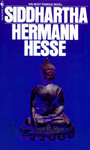
Siddhartha by Hermann Hesse

Title : Siddhartha
Author : Herman Hesse
Publisher : Bantam Book

 "The true profession of man is to find his way to himself"
Siddhartha is the story of every thinking individual as one maneuvers through the paths of life while trying to work on the conflicts that the three essential elements of a being pose - mind, body and soul.  I consider such books small little pauses in the otherwise madly running lives in current times. They goad an individual to stop, think, introspect and examine which one of the three - mind, body or soul is dominating the self at any given point of time.

Siddhartha, as a boy got enchanted by the thoughts of gods and sacrifices, as a young adult left his home in order to conquer his mind and body to live as an ascetic, as a man got immersed in fulfilling the pleasures of senses and becoming their slave, and later left everything that was dear to him to embark on a fresh journey to find peace and Atman. His life came a full circle starting from a boy to a man and then back to being a child again. The boy who was boastful of three incredible arts - fasting, waiting and thinking, saw the same abandoning him one by one. He ended up exchanging the skills that he had acquired during the diligent years of youth, for the transitory things which usually obsess an ordinary man. Eventually he had to get in touch with his inner self in order to attain the divine peace.

As  he progressed in his journey of life, his personality changed, his needs changed and accordingly his teachers changed and in the end he learns the essence of life from outwardly mute river. Sitting silently by the river, watching its continuous flow, Siddhartha learns the timeliness of a being, unity of things and the art of listening to that one sound - the Om sound - which has the power of submerging every diverse sound in its folds.  "Learned from river to listen, to listen with still heart, with a waiting, open soul, without passion, without desire, without judgment, without opinions. "

A very thought provoking story but then it does make you believe that things happen when they have to happen and when the time is ripe for the same to happen. Perhaps this was the reason that even after meeting Buddha and getting impressed with his demeanor and his teachings, Siddhartha felt the need to leave that place as he believed that a teacher can simply impart knowledge but cannot make the disciples share the wisdom that experience only brings. "Wisdom is not communicable. Knowledge can be communicated, but not wisdom. One can find it, live it, be fortified by it, do wonders through it, but one cannot communicate and teach it."

Siddhartha's words while he decided to leave Buddha to embark on his pursuit alone - "Buddha you have reached the highest goal which so many thousands of Brahmins and Brahmins' sons are striving to reach. You have done so by your own seeking, in your own way, through thought, through meditation, through knowledge, through enlightenment. You have learned nothing through teachings. Nobody finds salvation through teachings. To nobody, can you communicate in words and teachings what happened to you in the hour of your enlightenment. The teachings of the enlightened Buddha embrace much, they teach much - how to live righteously, how to avoid evil. But there is one things that this clear, worthy instruction does not contain, it does not contain the secret of what the Illustrious One himself experienced. "

Wednesday, May 2, 2012

Old Path White Clouds by Thich Nhat Hanh


Title : Old Path White Clouds
Author : Thich Nhat Hanh
Publisher : Hind Pocket Books
ISBN : 81-216-0675-6

Thick Nhat Hanh is a Vietnamese Buddist monk and an accomplished author who has penned - Being Peace, Under the Banyan Tree, The Path of Emancipation and 85 other books. In 'Old Path White Clouds' , he presents the life and teachings of Gautam Buddha spanning over 80 years.

The story is divided into small chapters and are presented in a very simple language.  Through this book, readers get a glimpse of Buddha's thoughts, how he followed his inner calling to embark on a journey of self realization and what all he experimented with to attain the blissful state. During the course of his search, he first tried the path of self deprivation but later realized that -"The body is not just an instrument, it is the temple of the spirit, the raft by which we cross the other shore." He stopped practicing and advocating self-mortification.
"He realized that body and mind formed one reality which could not be separated. The peace and comfort of the body were directly related to the peace and comfort of the mind. To abuse the body was to abuse the mind. "
After attaining enlightenment, he dedicated his life to leading many individuals to the same path of peace and devotion.

He taught the world the significance of mindful awareness and living in the moment by being a role model who practiced every ounce of what he preached. "Your mind should  not be chasing after thoughts of yesterday or tomorrow, but should dwell fully in the present moment. Living in mindful awareness is living in the moment, your mind and body dwelling in the very here and now. Living each day mindfully is the very basis of spiritual practice."

It is interesting to read how Buddha compiled the Noble Eightfold enlightenment path, and how throughout his life, he tried to share his peaceful state with so many others who came in contact with him. One very important aspect, though very small, caught my attention - he was very effective in teaching every individual in the language that the person understood the best, for instance, Svasti was a buffalo boy and he was taught using the terms that he was most conversant with while to a Sitar player he used the strings of the sitar as an example while showing him the divine path. There is a lot that a reader can take from the book. This is the first biography of Buddha that I read which took me through some very significant moments of Buddha's life.

However, I cannot skip mentioning that this book does falter at many points - it is repetitive and many parts are redundant which only increase the volume of the book without enriching the readers in any way. The book could have been more precise to be more effective. Some of the chapters give an impression as if they are compiled bits and pieces from here and there. As I understand, a biography should be more tight with no scope of redundancy because it is primarily a sincere presentation of facts. Also, the narrative keeps vacillating from Svasti the buffalo boy to Buddha himself, which makes it a little disruptive sometimes.

Thich was nominated for the Nobel Peace Prize in 1967 by none other than Martin Luther King Jr. He is the founder of Van Hanh Buddist University in Saigon, and has taught at Columbia University and the Sorbonne.

Must quote a few lines from the book -
"Bhikkhus, when you have seen deeply and have attained the Way, the beautiful may still appear beautiful and the ugly may still appear ugly, but because you have attained liberation, you are not bound by either. When a liberated person looks at beauty, he can see that it is composed of many non-beautiful elements. Such a person understands the impermanent and empty nature of all things, including beauty and ugliness. Thus he is neither mesmerized by beauty nor repulsed by ugliness."

Bhikkhu must cleanse his body and mind of desires, attachments, anger and aversions.

Love is possible only when there is understanding. And only with love can there be acceptance."